When Menopause Makes You Ache: Understanding the Musculoskeletal Syndrome of Menopause
Updated: May 14

If your body has felt stiffer, achier, or somehow older overnight, you are not imagining it.
A lot of women expect hot flashes, sleep changes, or mood shifts in perimenopause and menopause. What often catches them off guard is the body pain. The sore feet when you first stand up. The nagging shoulder. The creaky knees. The workout recovery that suddenly feels slower than it used to.
There is now a name being used for this pattern: the musculoskeletal syndrome of menopause.
In a 2024 review published in Climacteric, researchers proposed this term to describe the collection of muscle, joint, tendon, and bone-related changes that can happen as estrogen levels decline. The authors note that more than 70% of women experience musculoskeletal symptoms during the menopause transition, and that these symptoms can have a major effect on quality of life.
In other words: if your body started talking back during perimenopause, this is real.
What does it feel like?
It can look different from woman to woman, but common complaints may include:
joint pain or stiffness
muscle aches
slower recovery after exercise
loss of strength or muscle mass
tendon problems
back pain
reduced balance or mobility
A 2026 systematic review and meta-analysis covering 37 observational studies and 93,021 women found that musculoskeletal symptoms during perimenopause and menopause are common and often underrecognized.
Why does this happen?
Estrogen does much more than regulate periods.
It also plays a role in bone turnover, muscle mass, connective tissue health, and pain signaling. As estrogen levels shift and eventually decline, women may become more vulnerable to joint pain, reduced muscle mass, bone loss, and worsening osteoarthritis-related changes. That is part of why some women feel like their bodies change faster in their 40s and 50s than they expected.
This does not mean every ache in midlife is automatically menopause. Arthritis, thyroid disease, autoimmune conditions, vitamin deficiencies, poor sleep, and overuse injuries can all matter too. But menopause may be a very important part of the story, and it is often overlooked.
And honestly, that matters.
Because many women start blaming themselves. They assume they are out of shape, lazy, weak, or “just getting old.” But sometimes what is really happening is that their hormones are shifting, their recovery needs are changing, and their body needs a new strategy.
That is a very different story.
What can help?
There is no one-size-fits-all answer, but there are a few important foundations.
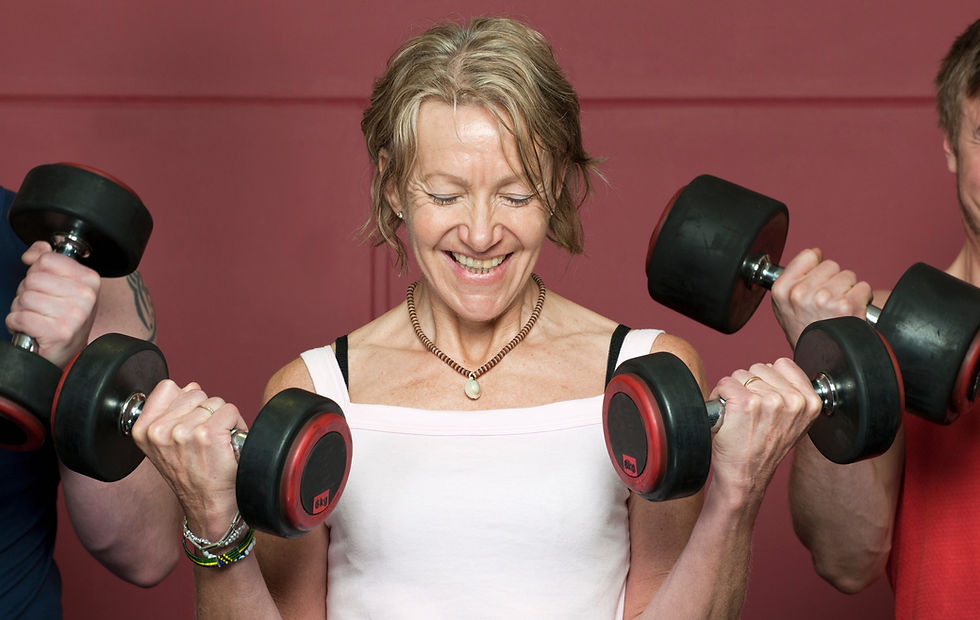
Strength training becomes even more important. Your muscles and bones need support in this season. Resistance training can help maintain strength, function, and bone health through midlife and beyond.
Recovery matters more than it used to. If your body feels more achy, your workouts do not need to disappear, but your plan may need to mature. More is not always better. Smart progression, rest days, sleep, hydration, and enough protein all count.
Bone health deserves attention early. The menopause transition is not the time to ignore bone health. It is a season to think proactively about prevention and long-term strength.
Persistent pain should not be brushed off. If you have significant joint pain, weakness, repeated injuries, or loss of function, it is worth getting evaluated. Menopause may be part of the picture, but it should not be used as a catch-all explanation for everything.
The bigger message
Menopause is not only about hot flashes.
It can affect how you move, how you exercise, how you recover, and how at home you feel in your own body. The 2024 review introducing this term argues that these symptoms deserve more recognition because of their impact on daily life and long-term health.
So if your body has felt stiffer, weaker, or more fragile lately, this is your reminder:
You are not being dramatic. You are not failing. And you are not the only one wondering what happened.
Your body may simply need a different kind of support in this season.
And that support exists.
Aching, stiffness, and slower recovery are not things you have to simply accept.
If joint pain, muscle aches, changes in strength, or slower workout recovery are showing up in midlife, Focused Health & Wellness can help you look at the bigger picture — including hormones, sleep, inflammation, nutrition, bone health, muscle, and long-term mobility.


Comments